
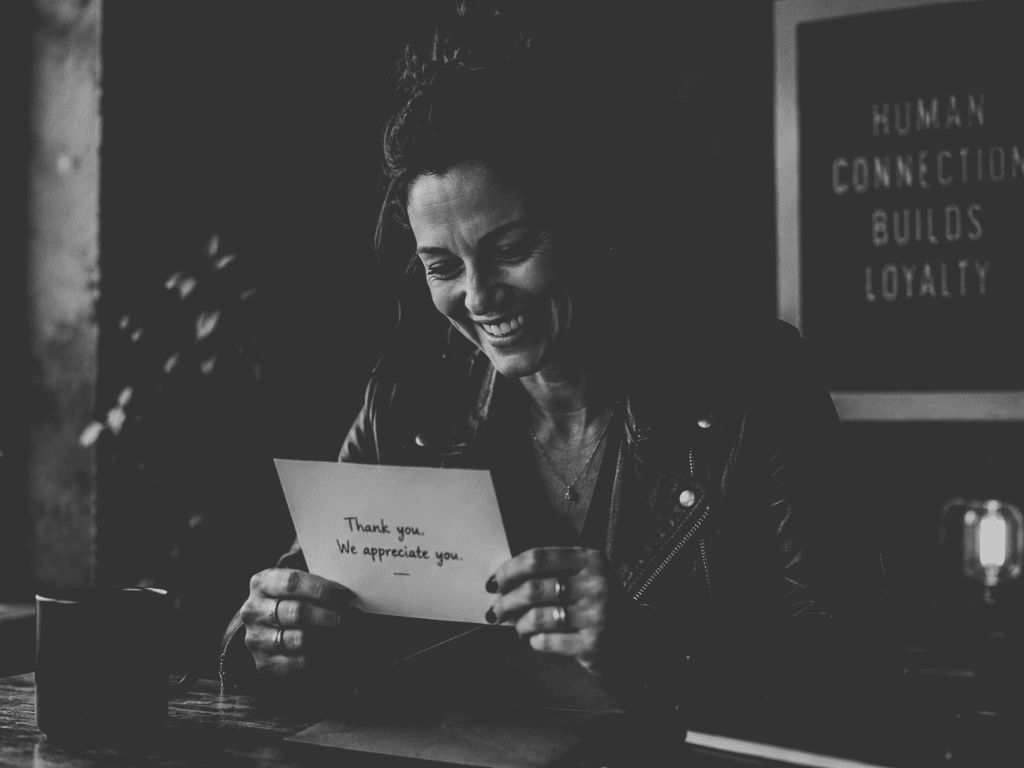
Which Customer Moments Deserve More Human Effort?
Modern marketing has never been more efficient. Brands can personalise emails at scale, automate customer journeys in real time, and trigger communications based on almost any behaviour imaginable. The technology is genuinely impressive. And yet, while it has transformed how businesses communicate, it has also created a quiet problem: too many interactions feel automated, transactional, and emotionally forgettable.
Efficiency is not the same as connection. And connection is what drives loyalty, not just satisfaction.
At Inkpact, we believe the most valuable customer moments deserve more than efficiency alone. They deserve human effort.
The Problem with Perfectly Optimised Customer Journeys
Automation has helped brands scale communication in ways that would have seemed impossible ten years ago. But scale can also remove significance. When every interaction feels templated, optimised, and immediate, customers stop feeling recognised as individuals. The experience becomes functional rather than memorable.
Research published by Harvard Business Review found that emotionally connected customers are more than twice as valuable as highly satisfied customers, driving stronger loyalty, retention, and advocacy. Satisfaction is the baseline. Connection is the differentiator.
And yet most CRM programmes are built almost entirely around satisfaction: speed of response, accuracy of communication, frequency of contact. Very few are built around emotional resonance. The result is that customers evaluate brands not just on what happened but on how it made them feel, and the feeling is increasingly neutral.
The attention economy has made this worse. Inboxes are flooded. Notifications are ignored. Digital communication has become so ubiquitous that even well-crafted, genuinely personalised emails often fail to register. The channel itself has lost signal. Customers are not disengaged because they do not care about brands. They are disengaged because nothing stands out.
The Customer Moments That Shape Loyalty
Not every interaction carries equal emotional weight. Some moments are transactional and should be efficient. Others are genuinely significant, and handling them with only automation is a missed opportunity.
The moments that shape how customers feel about a brand over the long term tend to share a common quality: they involve recognition. The customer wants to feel that the brand sees them as a person, not a segment.
These moments include:
A genuine thank-you. After a first purchase, a significant order, or a long relationship reaching a milestone, a thank-you message should feel genuine rather than procedural. A triggered email with dynamic first-name personalisation is better than nothing. A handwritten note on quality stationery is something a customer might keep on their desk.
A customer anniversary. The one-year mark of a subscription, a loyalty tier reached, a landmark order number: these are moments customers notice. A CRM trigger and a discount code is a reasonable response. A handwritten note that names the journey and expresses genuine appreciation is a different category of experience entirely.
A win-back campaign. When a customer has lapsed, the challenge is not just re-converting them. It is reconnecting emotionally. A discount alone signals that you noticed they left and want their money back. A thoughtful handwritten note signals that you noticed they left and genuinely miss them. The emotional frame changes the conversion dynamic entirely, and reducing customer churn begins long before a customer reaches that point of lapsing.
Complaint resolution. This is the highest-stakes moment in any customer relationship. Customers who complain and receive an empathetic, genuine response often become more loyal than customers who never had a problem at all. A handwritten follow-up after complaint resolution, expressing genuine regret and appreciation for the feedback, demonstrates care that no automated process can replicate.
Onboarding for high-value customers. The period immediately after a significant purchase or the start of a new subscription is when customers are most alert to signals about what kind of brand they have chosen. A handwritten welcome note sent in the first week sets a tone that shapes everything that follows.
Why Handwritten Communication Works at These Moments
Handwritten communication carries emotional weight because it signals effort. In a world designed for speed and scale, slowing down to write something by hand is a deliberate act. The recipient knows it took longer. They know someone thought about what to say. That knowledge changes how the message lands.
PwC research found that 73% of consumers say a positive experience is a key driver in their purchasing decisions, and that 43% would pay more for greater convenience or a more welcoming experience. A handwritten note delivers both: the convenience of a direct, physical communication that requires no login or inbox management, and the warmth of a welcome that feels genuinely personal.
This is not nostalgia. It is psychology. Tactile communication activates different cognitive and emotional processing than digital communication. Physical objects feel more real and more significant. The effort embedded in a handwritten note is visible and legible in a way that digital personalisation, however sophisticated, cannot replicate.
How to Identify the Right Moments in Your CRM
The practical question is not whether to use handwritten direct mail but where within the customer journey it creates the most value.
Retail CRM programmes typically find the strongest results at three points: post-first-purchase thank-you notes, win-back campaigns for customers who have not purchased in 90 or 180 days, and loyalty milestone recognition. These are moments when the emotional stakes are high and the cost of a generic interaction is measurable in churn and lifetime value.
Technology still plays a critical role in making this work at scale. CRM systems identify the right timing. Automation handles orchestration and triggers. Data makes the personalisation specific and relevant. But human connection comes from the effort inside the interaction, and that effort cannot be automated away.
The opportunity is not to replace smarter automation with handwritten notes. It is to use handwritten notes precisely at the moments where automation reaches its emotional ceiling.
TL;DR: Key Takeaways
- Efficiency is not connection. Marketing has never been more efficient, but efficiency alone does not create loyalty. Emotionally connected customers are more than twice as valuable as satisfied ones.
- Some moments demand more than a triggered email. Thank-yous, anniversaries, win-back campaigns, complaint resolution, and high-value onboarding are all moments where emotional resonance matters more than speed.
- Handwritten communication signals effort. That signal is visible, legible, and emotionally distinct from anything a digital channel can produce. It tells customers that someone took the time to acknowledge them properly.
- Automation and human effort are not opposites. CRM technology identifies the moment and handles orchestration. Handwritten direct mail delivers the human signal inside it. The two work together.
- Physical communication activates different emotional processing. Tactile objects feel more real and more significant. A handwritten note is something a customer might keep; a triggered email is something they scroll past.
- The question is not if but where. Identify the moments in your customer journey where emotional resonance matters most, and invest disproportionate human effort there. That is where the loyalty is built.
Which customer moments benefit most from a handwritten note?
The highest-impact moments are those with emotional significance: a genuine thank-you after a first purchase, a customer anniversary or loyalty milestone, a win-back attempt after a lapse, a post-complaint follow-up, and onboarding for high-value customers. These are the points in the customer journey where a person most wants to feel seen and valued rather than processed.
How does handwritten direct mail fit into a CRM strategy?
Handwritten direct mail works best as a precision layer within a broader CRM programme. Technology handles identification and timing: the CRM flags the right moment, triggers the job, and tracks the outcome. The handwritten note delivers the emotional weight that a triggered email cannot. The two work together rather than competing, with automation providing scale and orchestration while the handwritten element provides the human signal.
What does the research say about emotional connection and customer value?
Research published by Harvard Business Review found that emotionally connected customers are more than twice as valuable as highly satisfied customers, measured across metrics including spend, retention, and advocacy. Satisfaction is functional; connection is commercial. Brands that reduce churn and grow lifetime value tend to be the ones investing in genuine emotional connection, not just smoother journeys.
How do brands personalise handwritten notes at scale?
Inkpact combines CRM data with trained human writers to produce genuinely personalised handwritten notes at volume. The personalisation goes beyond first name: notes can reference purchase history, location, product preferences, or the specific reason for contact. Each note is written by hand on quality stationery, making the experience feel individual even when delivered as part of a large campaign.
Is handwritten direct mail only relevant for high-value customers?
Not at all, though it often performs best where customer lifetime value justifies the investment. Many brands use handwritten notes for their entire top tier, for lapsed customers in win-back programmes, and for complaint resolution regardless of spend level. The emotional impact of a handwritten note in a complaint scenario is particularly significant: it signals genuine care in a way that a templated apology email simply cannot.